Close
  • Home
  • Grota
    • Our Rooms
    • Our Meeting Room
    • History
    • Fontes
    • Source of the River Liz
    • Things to do
  • Contact
  • EN
    • PT
address
Rua das Camarinhas 470 - Fontes, 2410-850 Leiria, Portugal
tel
+351 966 781 529
  • Home
  • Grota
    • Our Rooms
    • Our Meeting Room
    • History
    • Fontes
    • Source of the River Liz
    • Things to do
  • Contact
  • EN
    • PT

Geological landscape of the grota without flowers with flowers

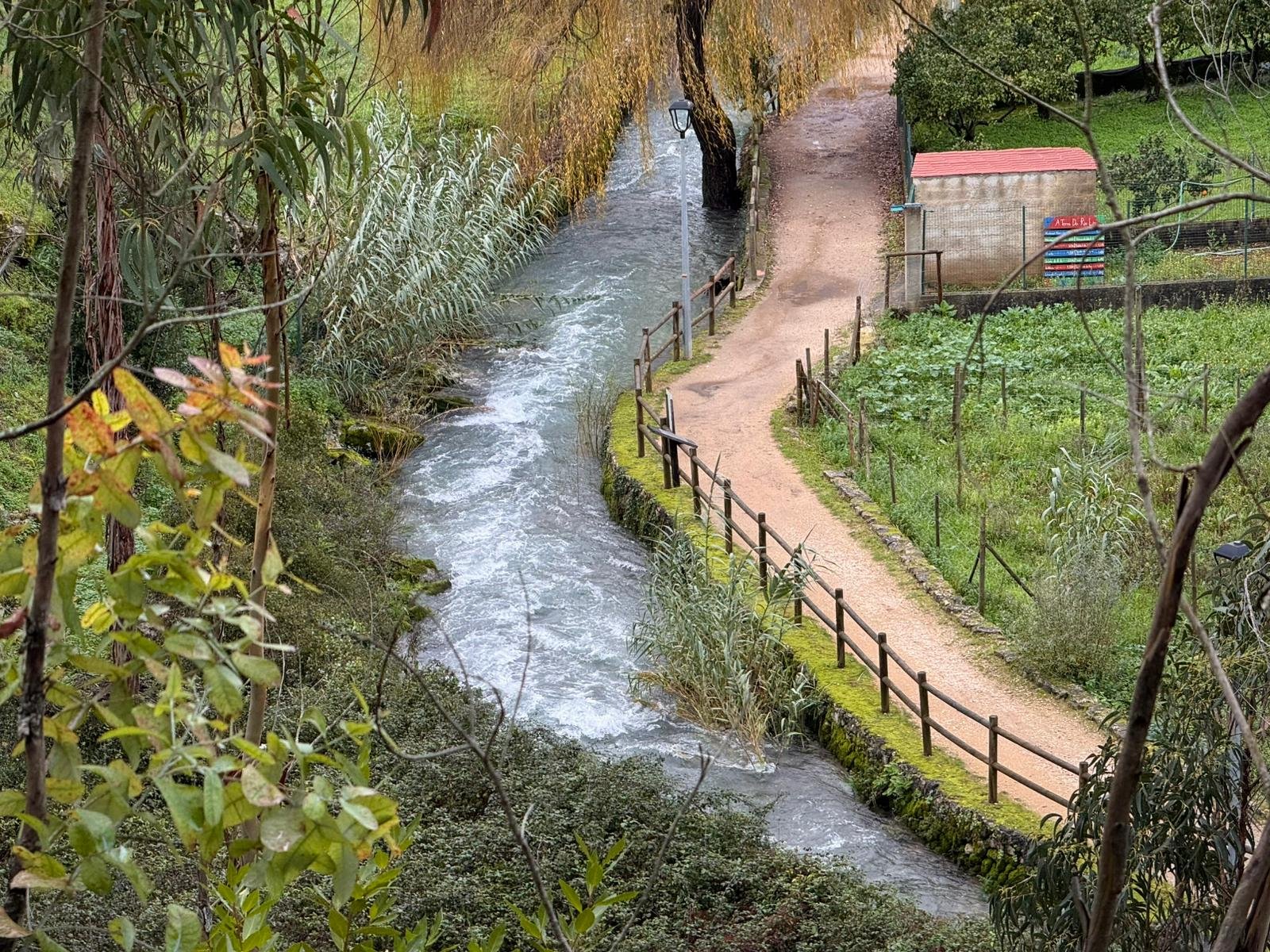
The grota is located between the edge of the Serra de Aire – with its underground world formed of cracked rock, caves and caverns, where rivers flow beyond the reach of most animals, and a dry surface of lapiaz – and the Lis Valley, where these waters emerge in different springs. In the grota, the main spring of the River Lis, water bursts forth spectacularly after some days of continuous rain in the mountain range, where the water falls and immediately disappears into the vertical conduits of dissolving limestone.
Can you imagine a world
without flowers?

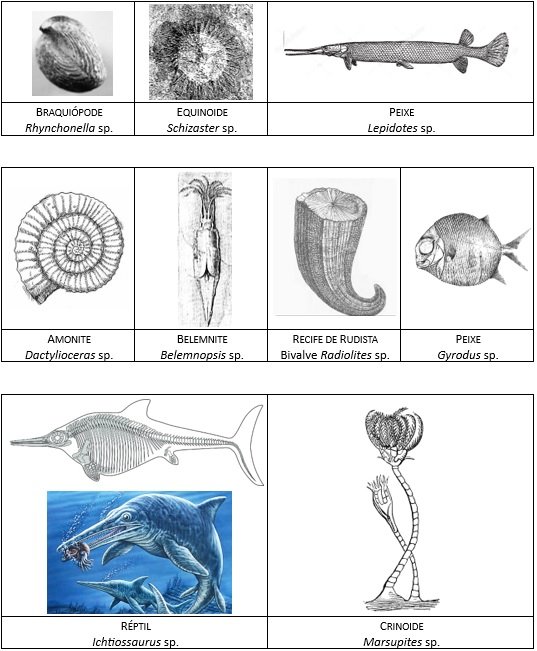
The rock beneath our feet around the grota was formed on the magmatic floor of the young Atlantic Ocean, at a time when flowers did not yet exist. In that distant past, many millions of years ago, the sea was clear, warm, shallow, rich in algae, and populated by rudist reefs around which crinoids, echinoids, brachiopods, ammonites, and belemnites swirled. There were reptiles such as ichthyosaurs, which swam swiftly, hunted fish and squid, and gave birth. In the calmer regions of the ocean, carbonates precipitated to form the Jurassic limestones of the geological floor of the grota. Slowly, a few centimetres per year, the ocean widened further and further, separating Europe from the North American continent, and even more slowly, the limestone increased in thickness. At times, ancient beings left their marks in the limestone mud: imprints, footprints, tracks, bones and shells. Information about climate change was also recorded in the rocks.

Discover fossil forms
found in Jurassic limestones.

After that time, there came another — already in bloom — which caused the thick slabs of Jurassic limestone to rise, fold, and fracture. In the dance of tectonic plates, the collision of the Iberian microplate with the vast African plate wrinkled the landscape and gave rise to the mountain range we see behind the grota. And then… it rained. Rainwater, mixed with atmospheric carbon dioxide, infiltrated the fractures in the limestone, which bent and broke, opening cavities within its core and removing the carbonates along its path. This gave rise to karst, a landscape shaped by dissolving limestone, beneath which flow heavy, mineral-rich, scarcely filtered waters, where caves, lakes, and underground galleries are formed, a kingdom for bats – the symbol of Serra Natural Park. 

How a river is born
and where it flows.

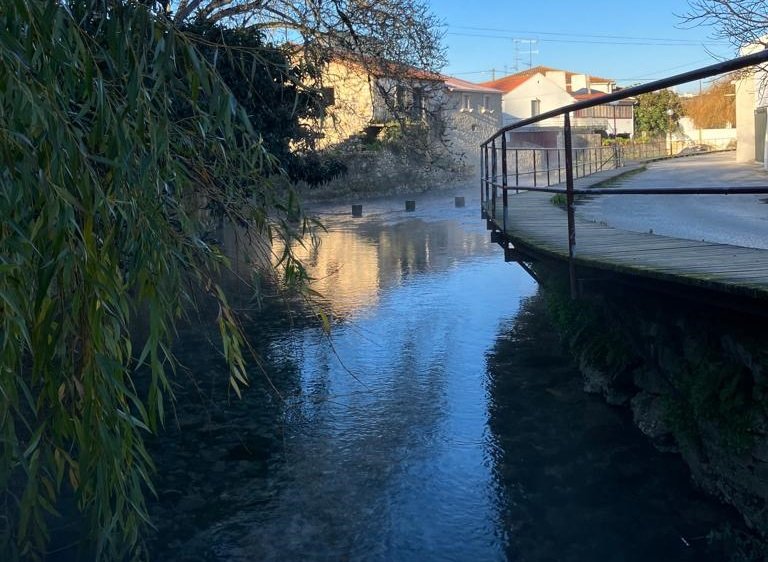
It is the rain that falls on the Serra de Aire that feeds the River Lis. It emerges in the grota — the main spring — several dozen metres above sea level, as well as in the various springs or resurgences around the grota, such as the “Eye”. The waters of the River Lis and its tributaries — the Lena River, the Milagres stream, the Carvide stream, the Bajouca stream, and the Sirol stream — all converge in the hydrographic basin. Yet it is within the depths of the karst that the water flows in greater volume. Together, surface and subterranean waters make their way and converge at the river mouth, near Vieira beach, returning to the Atlantic Ocean part of the matter that once belonged to it.

And what is the fauna like?

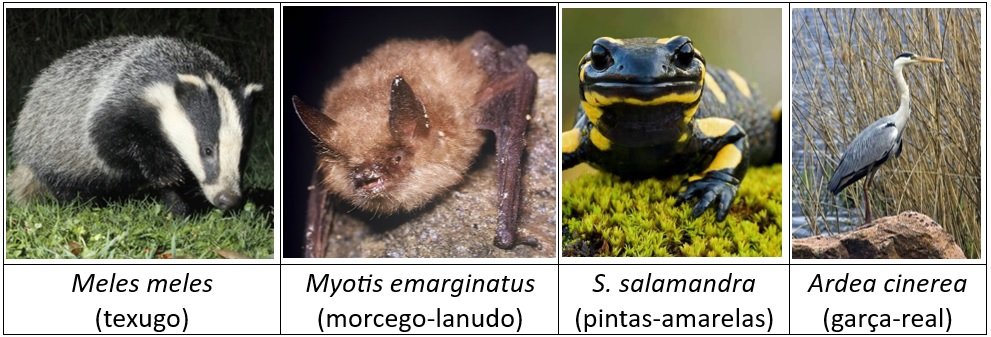
High up, in the mountains surrounding the grota, the landscape is karstic, and the animals are elusive. In the subterranean world, bats play a crucial role in conserving biodiversity. By facilitating the circulation of nutrients, they enable caves and caverns to be inhabited by spiders, beetles, crustaceans, and worms. Outside, bats control insect population (including pests and disease vectors), spread seeds, and pollinate certain plants. In this outer world, you can see badgers, foxes, wild boars, rabbits, eagles, hawks, owls, red-billed choughs, beetles, butterflies, and bumblebees. The plants of the Serra allow bees to produce high-quality honey; for this reason, you can see some groups of beehives belonging to residents of Fontes and the surrounding area.

Down below, near the waters of the river Lis, the fauna is more biodiverse. You can find domestic animals such as goats and chickens, as well as wild animals: otters, squirrels, snakes (both land and water snakes, none of which are poisonous), salamanders, herons, ducks, kingfishers, sand martins, blackbirds, nightingales and dragonflies.

There is no fishing activity on the river, and the water is unsuitable for human consumption, as the karst system of the Serra de Aire does not filter the water and contamination can easily occur through the sinkholes that connect the surface of the mountain to the aquifer. There are crayfish, eels, planarians, ruivacos, barbel, green frogs and toads.


  • Experiencie a Nascente do Rio Liz

  • Address

    Estrada das Camarinhas 470
    2410-850 Leiria, Portugal

  • Booking

    Phone: +351 966 781 529
    reservas@grota.pt

  • Home
  • History
  • Our Rooms
  • Things to Do
  • Contact
© Copyright Grota